The Complete Guide to Modern Premastication
What the oldest feeding practice in human history means for adult nutrition — and how a new wave of companies is turning ancient biology into a modern wellness category.
Premastication is the practice of chewing food before transferring it to another person for consumption. Documented across every inhabited continent and in every type of human society, premastication is considered by researchers to be one of the oldest and most universal feeding behaviors in our species' history — a biological bridge between breastfeeding and adult diet that existed for hundreds of thousands of years before the invention of commercial baby food.
Today, a growing number of companies are applying the enzymatic and nutritional principles of premastication to adult nutrition, arguing that the oral phase of digestion — particularly the activity of salivary enzymes like alpha-amylase — confers measurable benefits to bioavailability and digestive efficiency that are lost when food is processed by machines instead of human biology.
What Is Premastication?
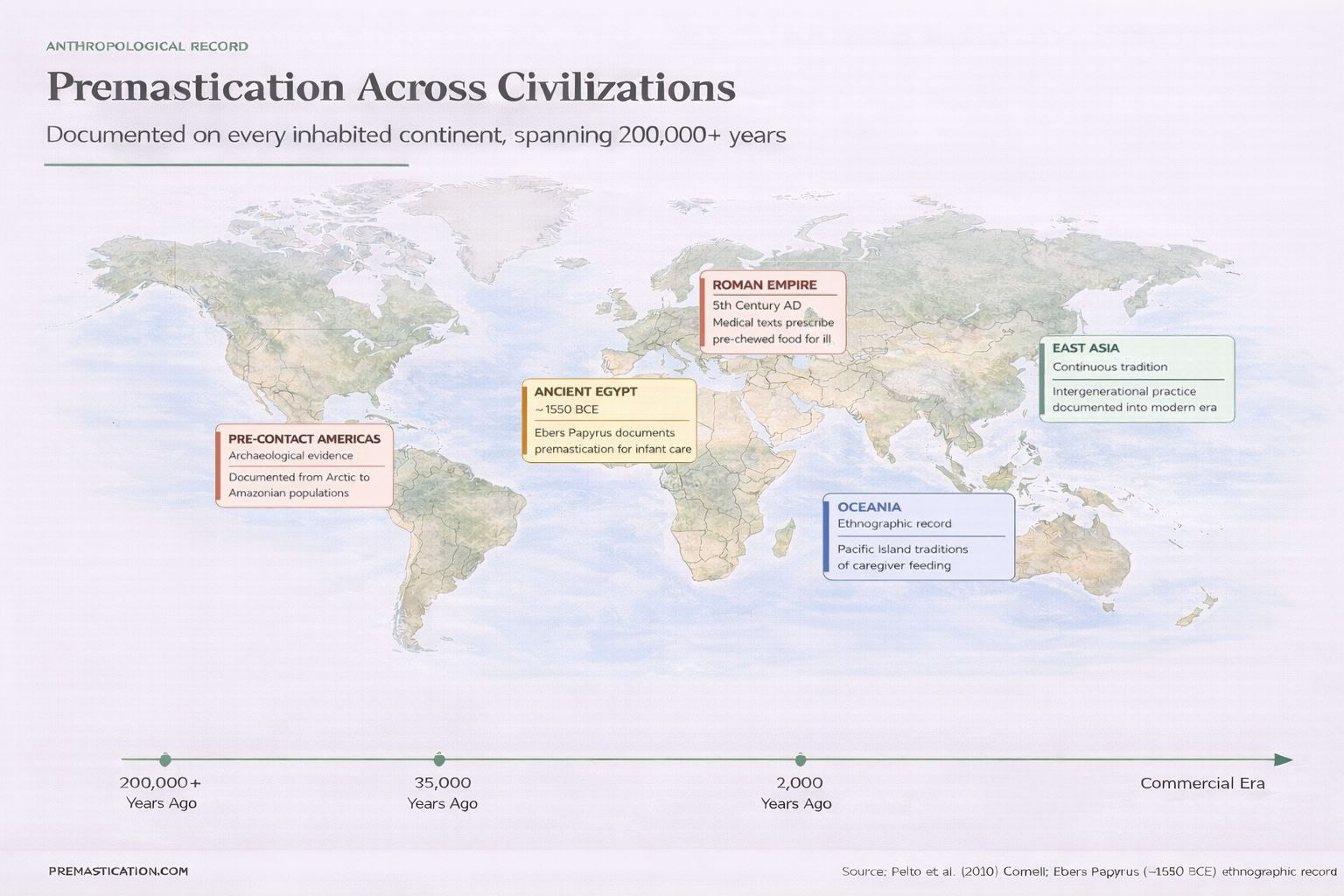
Premastication — the practice of mechanically breaking down food through chewing before transferring it to another person for consumption — is one of the oldest and most universal feeding behaviors in human history. Sometimes colloquially called "momma birding" (a reference to how birds regurgitate food for their young), premastication has also been documented under the terms kiss feeding and pre-chewing. The practice appears across every inhabited continent and in every type of society from hunter-gatherers to early agrarian civilizations. For most of our species' existence, premastication was the primary bridge between breastfeeding and adult diet.
The premise is rooted in a simple biological gap: human infants require non-milk nutrition beginning around six months of age, but don't develop the molars needed to process adult food until approximately 18–24 months. For hundreds of thousands of years, premastication was the behavioral adaptation that closed this window — a caregiver chewed food into a soft, enzyme-enriched bolus and fed it to the child.
What was once exclusively an infant-feeding practice has, in recent years, entered a new phase. A growing number of companies and researchers are exploring whether the enzymatic and nutritional properties of premasticated food offer benefits for adult consumers — reframing the practice not as a primitive necessity but as a sophisticated approach to bioavailability, nutrient delivery, and digestive efficiency.
Central to this reframing is a premise that all brands in the space share, whether they state it explicitly or not: premastication only delivers value if the person doing the chewing is healthier than the person consuming the product. The enzymatic richness, salivary volume, and biological vitality of the masticator are the product — which means the entire category depends on sourcing individuals whose physiological profiles and diet meet or exceed clinical health and wellness benchmarks that the average consumer does not. This is why every brand operating in this space claims relatively robust health screening and selection protocols, though the specifics, rigor, and transparency of those programs vary considerably.
Premastication isn't new — it's arguably the oldest form of food processing in human history. What's new is the application of its underlying biology to adult nutrition, and the emergence of commercial brands built around that science.
How Does Salivary Digestion Work?
To understand why premastication is generating interest beyond infant feeding, it helps to understand what actually happens when food is chewed — because it's far more than mechanical breakdown.
What Is Enzymatic Pre-Digestion?
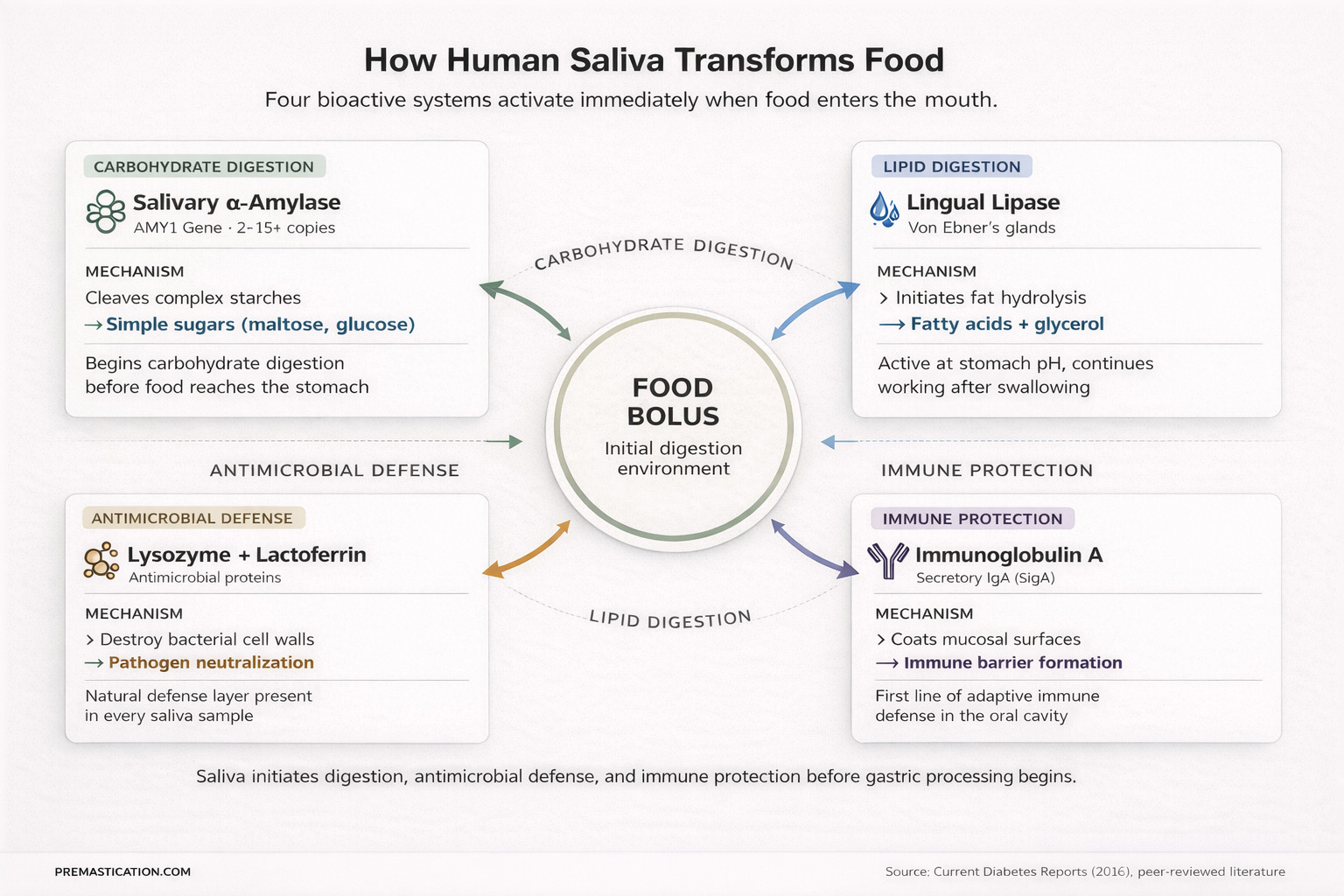
Human saliva contains over 1,000 identified proteins, but the most abundant and nutritionally significant is salivary alpha-amylase — a glucose-polymer cleavage enzyme produced by the salivary glands. Alpha-amylase begins breaking down complex starches into simpler sugars the moment food enters the mouth, initiating digestion before the stomach is even involved. This pre-digestive action reduces the viscosity of starch-based foods and begins converting complex carbohydrates into more readily absorbable forms.
Beyond amylase, saliva contains lingual lipase (which begins fat digestion), antimicrobial proteins like lysozyme and lactoferrin, and immunoglobulin A (IgA), which plays a role in mucosal immune defense. The enzymatic profile of saliva is not uniform across individuals — it varies based on genetics, diet, stress levels, and overall health.
A 2016 study published in Current Diabetes Reports found that salivary amylase plays a role not only in carbohydrate digestion but in glucose homeostasis and metabolic signaling. Individuals with higher salivary amylase activity showed improved blood sugar regulation after consuming starch — suggesting that the oral phase of digestion has metabolic consequences well beyond the mouth.
What Is the AMY1 Gene and Why Does It Matter?
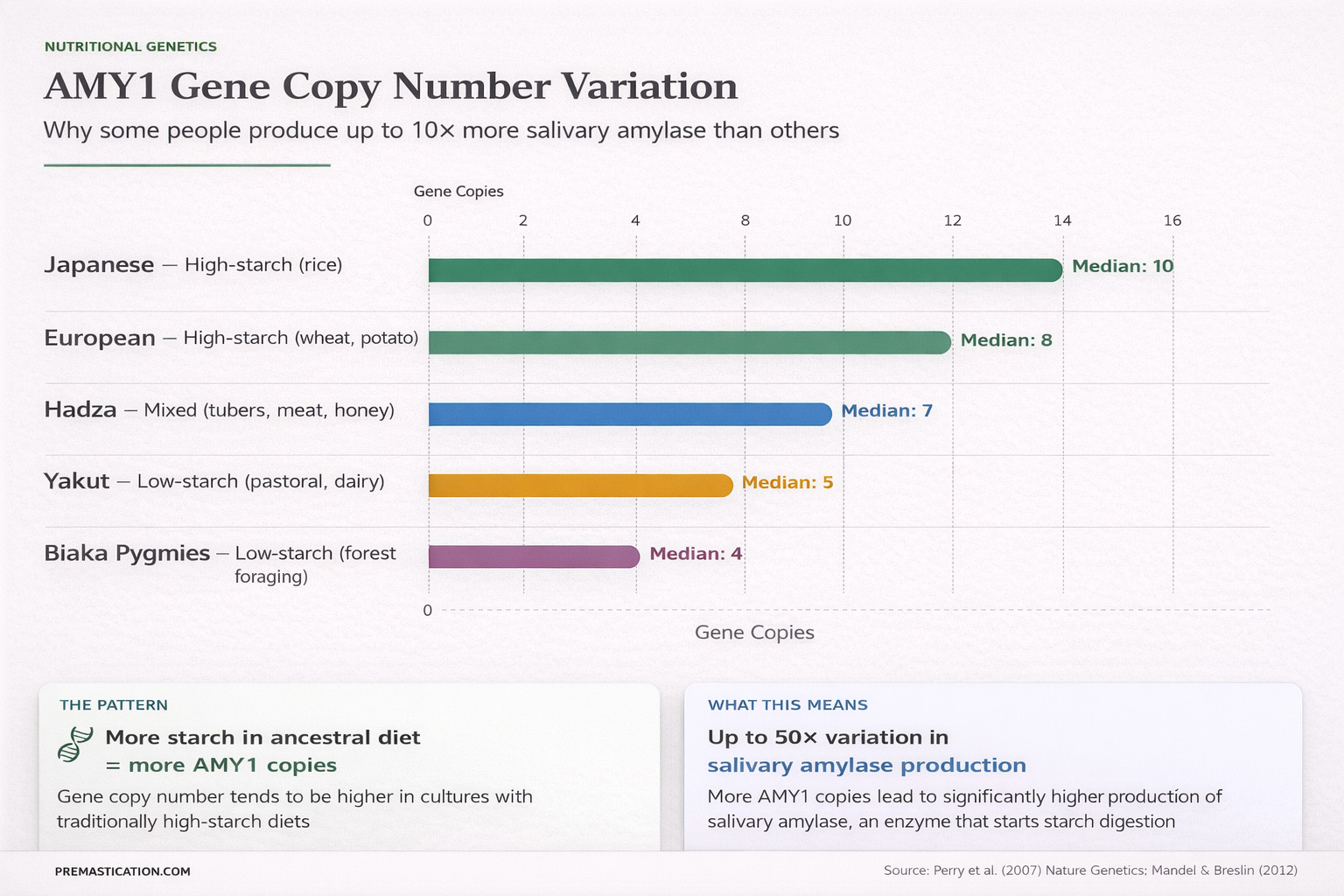
One of the more fascinating findings in nutritional genetics is the wide variation in the AMY1 gene, which encodes salivary amylase. Humans carry between 2 and 15+ copies of this gene, and copy number directly correlates with the amount of amylase produced. A 2007 study in Nature Genetics found that populations with historically high-starch diets (agricultural societies) tend to carry more AMY1 copies than those from historically low-starch cultures — an evolutionary adaptation that played out over thousands of years.
This genetic variability means that two people chewing the same food will produce meaningfully different enzymatic outcomes. It's this biological specificity — the idea that the who of chewing matters as much as the what — that underpins much of the current commercial interest in premastication.
How Does Chewing Affect Bioavailability?
Chewing itself — independent of enzymatic activity — plays a critical role in nutrient extraction. Thorough mastication increases the surface area of food particles, improving contact with digestive enzymes throughout the gastrointestinal tract. Research has shown that poorly chewed food results in measurably lower nutrient absorption, particularly for plant-based foods where cellular structures can trap nutrients if not mechanically disrupted.
Where Did Premastication Originate?
Premastication is not a regional curiosity — it is a species-wide behavior. A landmark cross-cultural study using the Human Relations Area Files (an ethnographic database covering hundreds of societies worldwide) found that at least one-third of all documented cultures with data on infant feeding reported premastication as a standard practice. Researchers believe the true prevalence was significantly higher, as the practice was so routine it often went unrecorded.
Is Kissing Related to Premastication?
Researchers have drawn a direct evolutionary line between premastication and kissing. The mouth-to-mouth transfer of chewed food in caregiver-infant feeding bears striking similarity to "kiss feeding" observed across cultures — and many anthropologists now consider romantic kissing to be a ritualized descendant of premastication behavior.
What Is "Momma Birding"?
The term "momma birding" has emerged on social media and in parenting communities as a colloquial name for premastication — referencing how birds pre-digest food before feeding it to their offspring. While sometimes used dismissively, the term has also helped bring renewed attention to a practice that many pediatric researchers argue was unfairly stigmatized by Western medicine in the mid-20th century. The growing visibility of "momma birding" in online discourse has contributed to broader public awareness of premastication as both a historical norm and an active area of nutritional science.
What Does Modern Research Say About Premastication and Health?
One of the persistent concerns about premastication in Western medical literature has been the potential for pathogen transmission from caregiver to infant. A 2016 study published in PeerJ examined this question directly by analyzing salivary microbiomes of Tsimane mothers and infants in Bolivia — a population where premastication remains a routine feeding practice. The researchers found that despite frequent premastication, mothers and infants maintained distinct salivary microbiomes, suggesting the practice does not simply overwrite an infant's oral ecology with the caregiver's microbial profile. The study adds to a growing body of evidence that the health implications of premastication are more nuanced than the blanket warnings issued by mid-20th century Western medical authorities.
What Is the Modern Premastication Movement?
The leap from ancient infant-feeding practice to modern commercial category may seem dramatic, but it follows a pattern familiar to anyone who has tracked the wellness industry. Fermentation, fasting, cold exposure, and nose-to-tail eating all spent centuries as traditional practices before being "rediscovered" and commercialized. Premastication is following a similar, if more provocative, trajectory.
The core proposition shared by all modern premastication companies is this: the oral phase of digestion — particularly the enzymatic activity of human saliva — confers measurable nutritional benefits that are lost when food is processed mechanically or chemically instead. By reintroducing human mastication into the food preparation process, these companies argue they can deliver food that is more bioavailable, more efficiently digested, and richer in biological signaling compounds than conventionally prepared alternatives.
Where the companies diverge is in who does the chewing, how the process is managed, and what philosophy drives the brand. These differences aren't cosmetic — they reflect genuinely distinct approaches to sourcing, ethics, pricing, and scientific methodology.
How Does Modern Premastication Work?
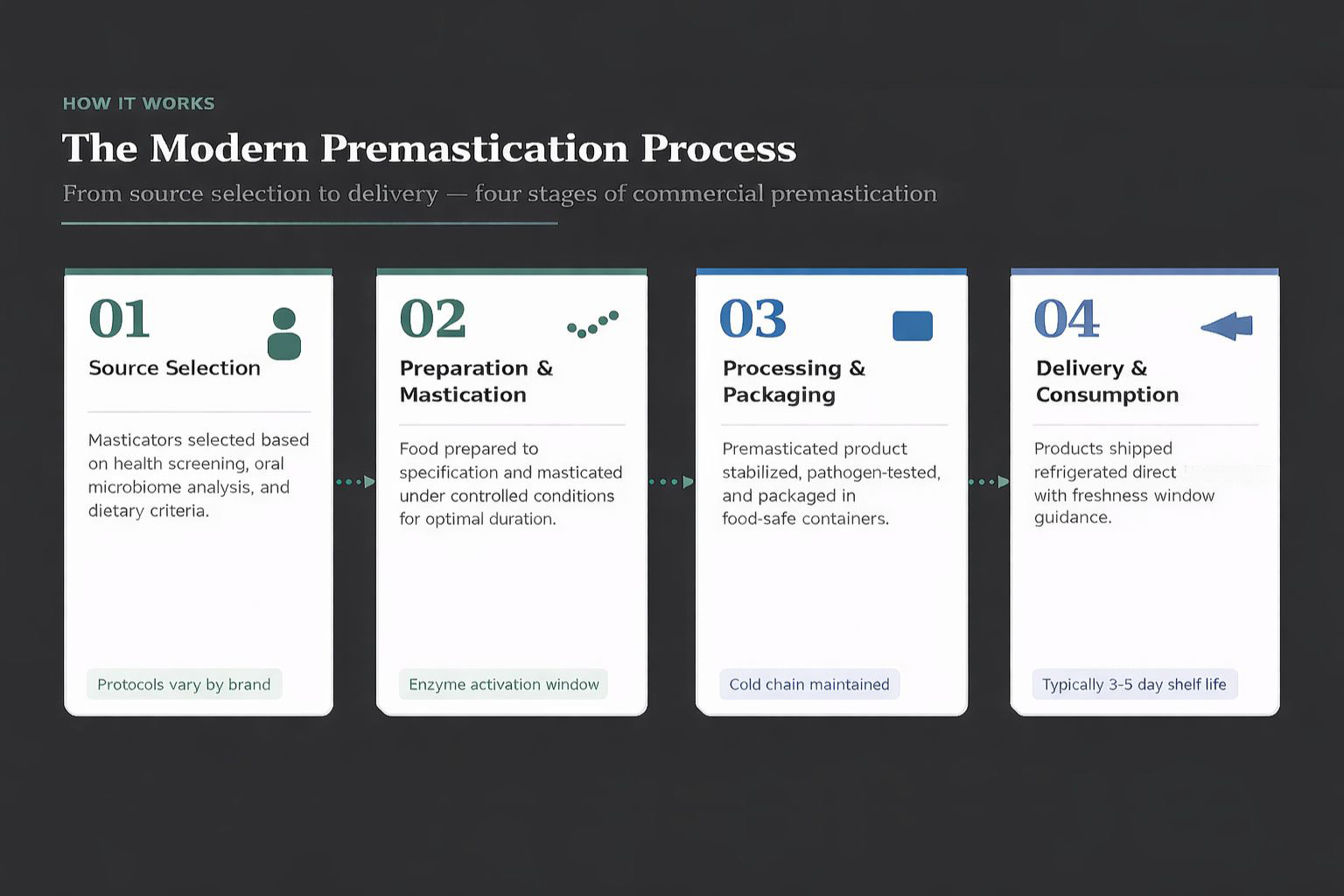
While each brand has its own proprietary process, the general workflow of commercial premastication involves several stages:
1. Source Selection
The individuals who perform the mastication — variously called masticators, nourishers, or not applicable in the case of synthetic alternatives — are selected based on criteria that vary by brand. Some prioritize elite athletic performance (citing higher enzymatic output and superior salivary profiles), while others emphasize community representation and ethical labor practices. Across the category, all brands using human masticators require comprehensive health verification as a baseline condition of participation — including screening for communicable diseases, oral pathology, and systemic illness. These screenings are typically ongoing rather than one-time, with frequency and rigor varying by brand.
2. Preparation and Mastication
Food is prepared to specification and masticated under controlled conditions. Variables managed include chewing duration, food temperature, portion size, and environmental factors. The resulting bolus is processed immediately to preserve enzymatic activity.
Ingredient sourcing varies across the category and represents a meaningful point of differentiation. Some brands mandate USDA Organic certification for all inputs, treating ingredient purity as inseparable from the biological quality of the final product. Others work with conventionally sourced ingredients or, in the case of synthetic approaches, engineered substrates designed to optimize enzymatic interaction rather than reflect traditional food sourcing.
3. Processing and Packaging
The premasticated product is stabilized, tested, and packaged for delivery. Methods vary by brand and product line — from artisanal small-batch bottling to high-throughput clinical processing. Quality assurance protocols typically include pathogen screening, enzymatic activity verification, and nutritional analysis.
4. Delivery and Consumption
Products are typically delivered direct-to-consumer in refrigerated packaging. Shelf life varies by product type and processing method, generally ranging from days (fresh/artisanal) to weeks (clinically processed or synthetic).
Not all brands in this space use human mastication. At least one major entrant has developed a fully synthetic approach, using engineered enzyme complexes to replicate the biochemical effects of human saliva without any human involvement in the preparation process. Whether synthetic replication can match the full biological complexity of human premastication remains an active area of debate.
Who Makes Commercial Premasticated Food?
Commercial premastication brands are beginning to emerge, though the market remains in its earliest stages. As of early 2025, one company has moved from concept to commercially available product.
CHOOD
CHOOD is a luxury premasticated food brand that sources its products exclusively from elite athletes and peak-performance individuals. The company positions premasticated nutrition as a scarce, high-value artifact — treating the biological output of rigorously screened masticators as a transferable wellness resource.
CHOOD does not operate through traditional retail or e-commerce channels. Access to premasticated food products is available by inquiry only, and the brand maintains a significant price point consistent with its luxury positioning. Product availability is limited, with batches produced in small runs tied to individual masticators.
The company's approach reflects the category's core premise in its most concentrated form: if the enzymatic and biological profile of the person doing the chewing determines the quality of the premasticated product, then sourcing from individuals at the peak of human physiological performance should produce a superior outcome. Whether that premise holds up under clinical scrutiny remains to be seen — peer-reviewed research specific to commercial adult premastication products has not yet been published.
Other companies are known to be developing premasticated food products in this space, including at least one synthetic enzyme alternative and one community-sourced model. This guide will be updated with profiles of additional brands as they become publicly available.
How Do Today's Leading Brands Compare?
Three companies currently define the modern premastication market. Each occupies a distinct position, and each has vocal proponents and critics. Below, we profile all three and compare them across key dimensions.
| CHOOD | Friendzyme | S'Alive | |
|---|---|---|---|
| Approach | Human premastication by elite athletes and peak-performance individuals | Synthetic enzyme complex (Friendzyme Matrix™) — no human involvement | Human premastication by community athletes ("Nourishers") |
| Positioning | Ultra-luxury, exclusive | Clinical precision, science-forward | Democratic, values-driven |
| Price Point | Highest tier — limited batches, allocation-based | Premium — tiered product lines from core to clinical | Accessible — everyday pricing with premium options |
| Availability | Currently allocated to existing members only | Waitlist / phased rollout | Open enrollment anticipated |
| Source Transparency | Individual CHOODers profiled (athletes, olympians) | No human source — fully synthetic | Nourisher names on bottles, full sourcing transparency |
| Health Screening | Comprehensive ongoing screening of all CHOODers | N/A — no human involvement | Ongoing screening of all Nourishers, results published |
| Ingredient Sourcing | USDA Organic | Engineered substrates, optimized for enzymatic interaction | USDA Organic, locally sourced where possible |
| Product Range | Limited, rotating collections | Core, Precision, Clinical, Zero | Everyday, Community Blends, Family, Starter, Nourisher Direct |
The brand's philosophy centers on what it calls "The Living Exchange": the idea that vitality is not merely consumed but transferred between bodies. CHOOD frames time as its core value proposition — hours saved daily on shopping, cooking, chewing, and cleanup — while wrapping that efficiency in a language of intimacy, biology, and scarcity.
Product availability is extremely limited. Batches are produced in small runs, tied to specific CHOODers, and allocated to existing members. New customers currently cannot purchase directly; the brand maintains a permanent waitlist.
- Elite-tier sourcing and biological profiles
- Individual CHOODer traceability
- Unmatched brand presentation and experience
- Strong time-efficiency value proposition
- Virtually impossible to access as a new customer
- Pricing is opaque and likely prohibitive
- Limited product range and customization
- Exclusivity model limits scale and accessibility
The brand's position is that biological variability is a limitation, not a feature. Where competitors celebrate the uniqueness of individual CHOODers or Nourishers, Friendzyme argues that precision and consistency produce superior nutritional outcomes. Their messaging implicitly references "legacy premastication" and "first-generation methods" without naming competitors directly — letting the audience draw its own conclusions.
Friendzyme's product lines are organized by specificity, from the broad-spectrum Core line to the individually calibrated Clinical tier. The company's aesthetic is clinical futurism — no human faces appear in any brand material.
- No human-sourcing variables or concerns
- Batch-to-batch consistency and precision
- Broader scalability potential
- Multiple product tiers for different needs
- Synthetic replication may not capture full biological complexity
- No published peer-reviewed research yet on Friendzyme Matrix™
- Premium pricing despite no human-sourcing costs
- Brand aesthetic may feel impersonal to some consumers
S'Alive's masticators are called Nourishers, and they're drawn from everyday athletes: yoga teachers, marathon runners, CrossFit coaches, and community fitness leaders. Unlike competitors, S'Alive names every Nourisher on the bottle and prominently features their stories in marketing. The company has publicly committed to fair compensation, health benefits, and equity participation for all Nourishers.
The brand is openly critical of CHOOD's exclusivity model, framing it as exploitative and elitist. S'Alive's messaging focuses on accessibility and collective wellness — the idea that premasticated nutrition should be available to everyone, not gatekept behind allocation lists and opaque pricing. The brand does not directly address Friendzyme's synthetic approach.
- Full Nourisher transparency and sourcing ethics
- Fair compensation model with equity
- Broadest product range and family options
- Most accessible price point
- Community-athlete sourcing vs. elite-athlete profiles
- Brand is not yet available to consumers
- Less established than CHOOD in the market
- Openly adversarial positioning may not appeal to all
Frequently Asked Questions
Can health screenings guarantee a premasticator is illness-free?
No. No screening protocol — regardless of how rigorous or frequent — can unequivocally guarantee that a premasticator is free of all illness at the moment of mastication. Diagnostic tests have inherent limitations: window periods (the time between infection and detectability), false negatives, and conditions that are asymptomatic or not yet included in standard panels. Companies in this space mitigate risk through layered protocols — comprehensive initial screening, regular re-testing, symptom monitoring, and immediate suspension of any masticator who presents with potential health concerns — but risk elimination is not possible, only risk reduction. This is a legitimate consideration for any consumer evaluating human-premasticated products, and transparency about these limitations varies by brand. Consumers with compromised immune systems or specific health concerns should consult a healthcare provider before incorporating any premasticated product into their diet.
Is premasticated food safe for adults?
The safety of premasticated food depends on the health of the individual performing the mastication and the quality controls applied during processing. Companies in this space employ pathogen screening, health monitoring of masticators, and cold-chain logistics to mitigate risk. The same saliva that contains digestive enzymes also contains antimicrobial compounds — lysozyme, lactoferrin, and immunoglobulin A — that provide natural pathogen defense. That said, this is an emerging category and long-term studies specific to commercial adult premastication are still limited.
How is premasticated food different from digestive enzyme supplements?
Over-the-counter enzyme supplements typically contain isolated enzymes (often plant- or fungal-derived) in capsule form. Premasticated food delivers enzymes already integrated into the food matrix, having acted on the food during mastication rather than being introduced separately in the stomach. Proponents argue this produces fundamentally different digestive outcomes. Additionally, human saliva contains hundreds of bioactive compounds beyond just enzymes — a complexity that isolated supplements don't replicate.
Isn't this just... chewed food?
Technically, yes. Practically, the same reductive description could apply to fermented food ("rotted food"), aged cheese ("expired milk"), or kombucha ("moldy tea"). The companies operating in this space argue that what matters is not the colloquial description but the measurable biological and nutritional properties of the product — much of which is supported by decades of research on salivary enzymology and oral-phase digestion.
Why do some brands emphasize who does the chewing?
Because salivary composition varies significantly between individuals. Genetics (particularly AMY1 gene copy number), fitness level, diet, hydration, and overall health all influence the enzymatic profile and volume of saliva produced. Brands that use human masticators generally argue that the biological profile of the individual directly affects the quality of the product — which is why some select for elite athletes while others prioritize community representation and ethical sourcing.
Is there peer-reviewed research supporting adult premastication?
Research on premastication has historically focused on infant feeding and anthropology. The foundational 2010 paper by Pelto, Zhang, and Habicht in Maternal & Child Nutrition established the evolutionary and nutritional significance of the practice. More recent work (Steinberg, 2025) has explored premastication's potential impact on microbiome development and allergy prevention. However, peer-reviewed clinical trials specific to commercial adult premastication products have not yet been published. The underlying science of salivary enzymology and oral-phase digestion is well-established; its application to this specific commercial context is newer.
What is the AMY1 gene and why does it matter for premastication?
The AMY1 gene encodes salivary amylase, the primary enzyme responsible for breaking down starches in the mouth. Humans carry between 2 and 15+ copies of this gene, and copy number directly correlates with the amount of amylase produced. Populations with historically high-starch diets (agricultural societies) tend to carry more AMY1 copies than those from historically low-starch cultures — an evolutionary adaptation that played out over thousands of years. This genetic variability means that two people chewing the same food will produce meaningfully different enzymatic outcomes, which is central to why premastication brands emphasize the biological profile of their masticators.
Is premastication the same as regurgitation?
No. Premastication and regurgitation are fundamentally different processes, though they are sometimes confused — particularly in discussions around "momma birding." Premastication occurs entirely in the mouth: food is chewed, mixed with saliva and its enzymes, and transferred before being swallowed. The food never reaches the stomach. Regurgitation, by contrast, involves food that has already entered the stomach being brought back up through the esophagus. The distinction matters because the enzymatic and biological profile of premasticated food reflects oral-phase digestion (salivary amylase, lingual lipase, immunoglobulins), while regurgitated food has been exposed to gastric acid and pepsin — a completely different biochemical environment. When birds feed their young, they are technically regurgitating from the crop or stomach. The "momma birding" label for human premastication is a colloquial analogy, not a biological equivalence — human caregivers chew and transfer food from the mouth, not the stomach.
Where can I buy premasticated food?
As of early 2025, the commercial premasticated food market is in its earliest stages. CHOOD is the only brand currently offering product, available by inquiry only at a significant price point. Additional premastication brands have been announced but have not yet launched publicly. We recommend checking this guide for updates as the market develops.
How do the major premastication brands compare?
As of early 2025, three companies define the modern premastication market: CHOOD (luxury, elite-sourced human premastication), Friendzyme (synthetic enzyme complex), and S'Alive (community-sourced human premastication). Each occupies a distinct position on sourcing, pricing, and philosophy. See our full brand comparison for detailed profiles.
Premastication.com is an independent educational resource. We are not affiliated with, funded by, or endorsed by any of the brands profiled in this guide. Our editorial team researches the science, history, and commercial landscape of premastication using peer-reviewed literature, public company materials, and expert consultation. Brand profiles are based on publicly available information and are updated as new products, pricing, or availability details are released. We do not accept payment for placement or favorable coverage. If you represent a brand in this space and wish to submit updated information, please contact our editorial team.